Squash did not become part of my diet until I was a grown-up and a friend made zucchini casserole and zucchini bread, which she regularly shared with our crowd.
You’ll find a lot of recipes for the green and yellow zucchini, commonly called summer squash, because, well, it’s prolific. Summer squash is among the veggie plants that know how to produce mass amounts. Zucchini is frequently shared with family, friends and neighbors throughout the season.

Winter squash is in the same family but has a different lifestyle. It’s as easy to grow as summer squash, but a couple of winter varieties – butternut and acorn squash – seem less bothered by squash vine borer or squash bug. These squash-destructive insects are a royal pain for gardeners.
See more: Deck the Halls with Holiday Container Decor Featuring Seasonal Greenery
Winter squash is slower to produce, so it’s not harvested until late summer and fall. And you can store it for about four months in a cool, dry place with air flow.
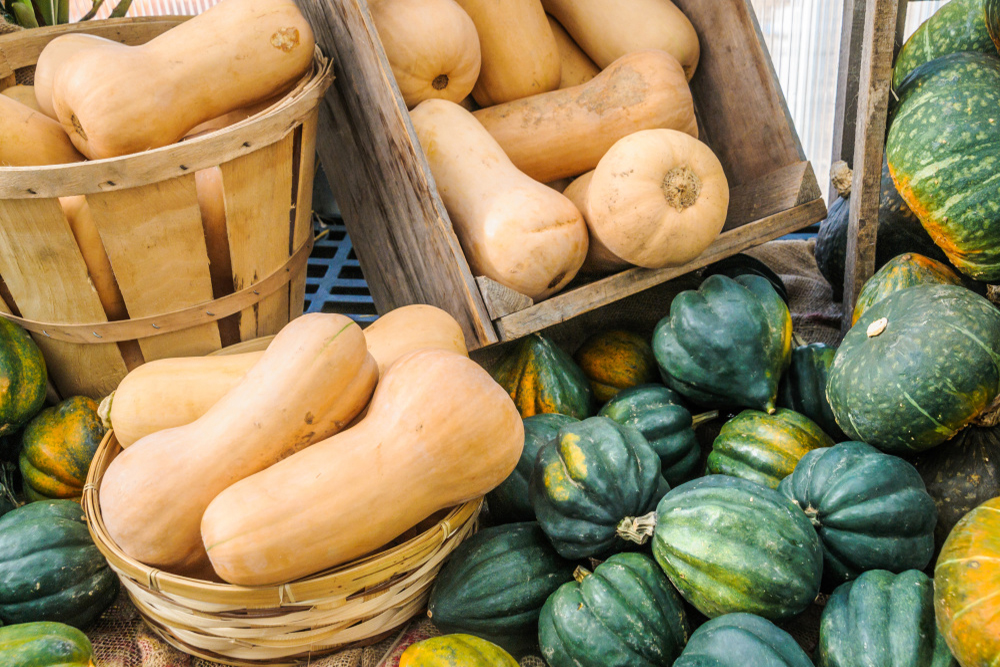
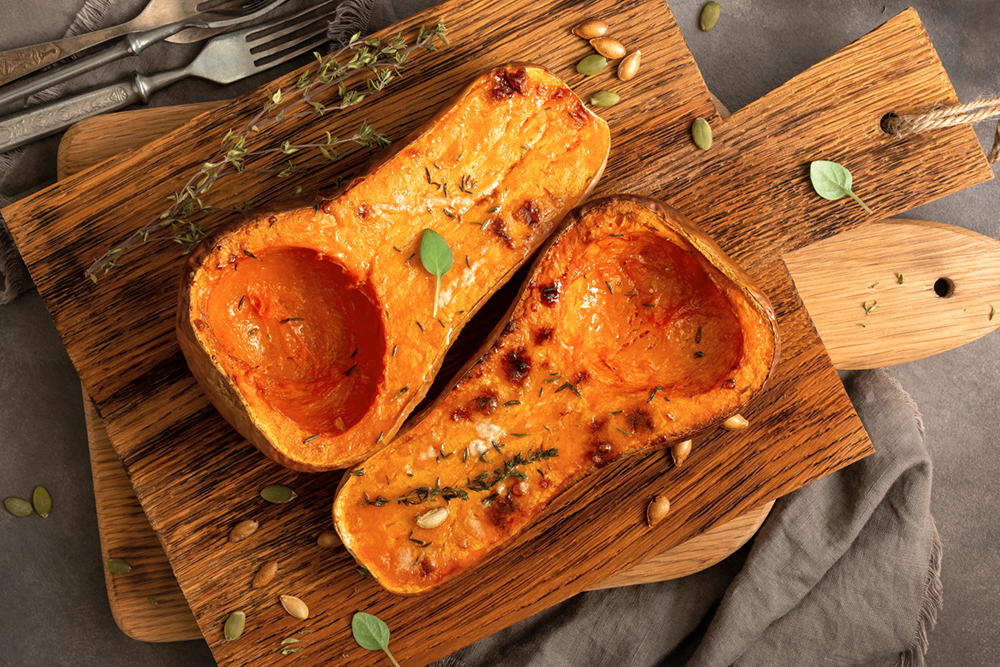
One of the best winter squashes is butternut. Not only is it a beautiful form, but it’s also delicious, meatier and more versatile than zucchini. And if you don’t want to grow it, you can buy butternut at farmers markets or the grocery store.
The same goes for acorn squash, another winner for winter meals. It also is readily available at grocery stores and farmers markets if you don’t want to grow your own. Each 4- to 6-inch rounded squash is a perfect meal for one person.
Winter squash is rich with vitamins, elemental nutrients and disease-fighting antioxidants. It can be grown from seed directly sown in the garden, seedlings from seed sown indoors or transplants from a garden center.
See more: Learn Fall Garden Tips and Tricks That Lead to Successful Spring Landscapes
Easy Winter Squash Recipes
Roasted Butternut Squash
- Cut the squash in half lengthwise and scoop out the seeds.
- Drizzle olive oil and sprinkle salt, pepper and other spices you’d like (cinnamon, for instance) on the cut side.
- Place cut side up on a baking sheet lined with parchment paper.
- Roast at 400 degrees for about 30 minutes. Squash is done when easily pierced with fork.
- Scoop out the roasted butternut squash to serve as a side dish.
Roasted Acorn Squash
- Cut the squash in half, top to bottom. To make this easier, remove enough of the bottom (where the stem is) so that the acorn squash can sit flat on a cutting board. Remove seeds.
- Spread about a tablespoon of butter and sprinkle a couple of tablespoons of brown sugar in each half. Add salt and pepper to taste.
- Place cut side up on a baking sheet lined with parchment paper.
- Roast for 30 minutes. When done, a fork should easily pierce the squash.
Tip: Be careful cutting winter squash. The skin is tough, and the squash has an awkward shape. Make sure your knife is sharp. Use a knife with a long blade, such as a chef’s knife, and keep the blade pointed down as you cut the squash.