As summer starts to wind down, we sometimes overlook flowers that will last through the end of the season and into fall. Sure, there are mums, but we’re expanding our options with more late-blooming plants, including two shrubs and perennials ideal for the Indiana garden.
These plants have bonuses because they attract pollinators, and you can cut some branches or stems for indoor enjoyment.

See more: Best Vegetables to Grow in Small Spaces
Shrubs Shine With Bright Hues
Caryopteris
Caryopteris, sometimes called blue mist spirea or bluebeard, is an underused aromatic shrub with long-lasting flowers that bees and other pollinators enjoy. Caryopteris is what gardeners call a cut-back shrub. Leave it upright through winter, but in spring, cut it back to about 8 to 10 inches high. The shrub grows new branches and starts to bloom, usually in August.
Grow in a sunny spot with well-draining soil. Caryopteris (C. x clandonensis) is drought-tolerant. There are several varieties available. Most Caryopteris are 2 to 3 feet tall, so select for size.
See more: Easy-to-Grow Herbs Flavor Grilled Meats and Vegetables
Beautyberry
This medium-sized shrub has tiny flowers in early summer, which are replaced with truly show-stopping purple berries later in the season. Another cut-back shrub in spring, grow it in part shade (three to four hours of sun) or full sun. Beautyberry (Callicarpa spp.) is drought-tolerant but does best when watered through hot, dry spells.
Beautyberry (C. americana) is native and hardy to U.S. Department of Agriculture Zone 6, which is most of Central Indiana and the southern part of the state. Several hybrids, such as Issai (C. dichotoma), also do well in Indiana.
The shrub has arched branches with clumps of berries along the stem, which the birds love. Most beautyberry shrubs range from about 3 feet tall and wide to about 5 feet tall and wide. The Pearl Glam variety has purple flowers.
See more: Debunk Common Garden Myths That Hinder More Than Help
Perennials Pop With Color
Sedum
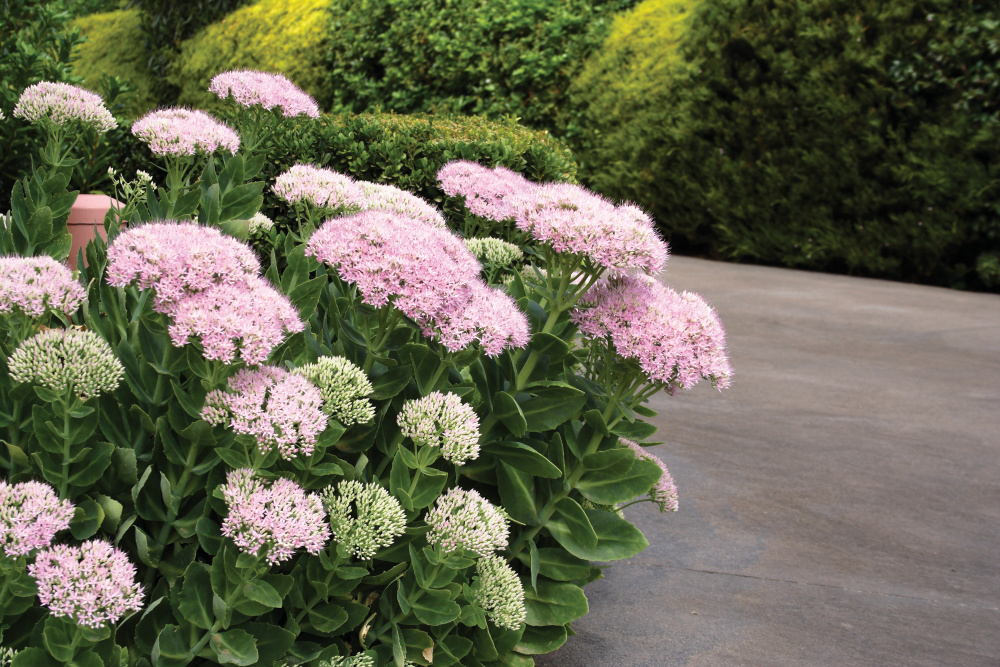
Taller varieties of sedum, such as Autumn Joy and Purple Emperor, bloom for several weeks in late summer and early fall. Their large, slightly rounded flowers make perfect landing pads for monarch butterflies, bees and other pollinators. The flowers are usually various shades of pink or soft white.
Grow in full sun (six to eight hours a day) and in well-drained soil. Sedums tolerate drought. Plus, you can cut some stems for indoor enjoyment. These fleshy-leafed perennials do great through winter. The flower heads dry, offering a nice look in the winter landscape. Don’t cut tall sedum (Hylotelephium spp.) until spring when you see new growth at the base of the plant.
See more: Evergreen Perennials Brighten Winter Gardens
Aster
A lovely native perennial, asters are a favorite of monarch butterflies and other pollinators. Asters (Symphyotrichum spp., formerly Aster spp.) do best in full sun. Most grow up to 2 to 3 feet tall and wide.
If you’d like shorter asters, cut them back by about one-third by the end of June or early July. Be sure to give asters plenty of circulation to reduce the risk of powdery mildew. Water the plants during long, dry spells.