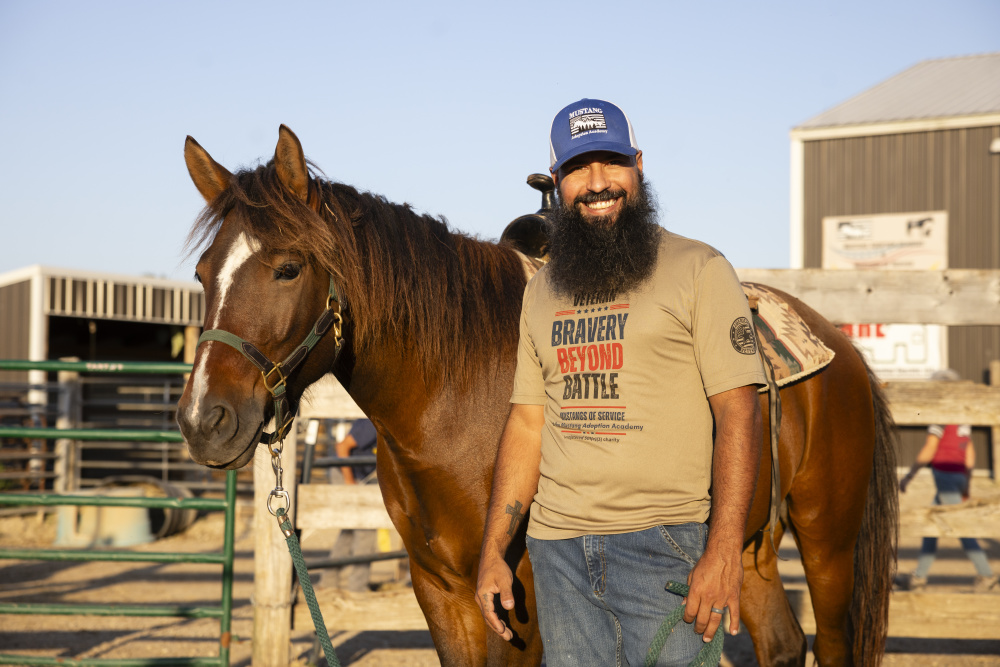
In Haubstadt, Indiana, wild horses and veterans find peace in Indiana pastures as both work toward a second chance in a nontraditional therapeutic setting. At the Mustang Adoption Academy, veterans with conditions such as post-traumatic stress disorder, depression or anxiety develop close bonds with wild mustangs in a flexible and unconventional healing setting through the academy’s Mustangs of Service program, which is free of charge.
Veterans participating in the program have found working with horses to be a uniquely beneficial medium to process their own inner struggles and find community with the animals and fellow service members alike.

See more: Linneweber’s Sauce Company Creates Spicy Sensations with Indiana-Grown Peppers
A Different Tack
At first, Iraq War Army veteran Nick Miller approached the Mustangs of Service program at Triple E Ranch as an experiment. Miller felt burnt out from traditional therapeutic methods and came into the program with managed expectations.
Over the course of a few months, Miller worked closely with a horse named Whiskey, who came from a traumatized background in rodeos and kill pens. From the start, Miller noted how closely his own inner experience of trauma was reflected in the horses.
“I saw a lot of myself in these mustangs,” Miller says. “If the herd was on one side of the field, Whiskey would just go to the other side of the field. I really felt that personally because I had stepped away from society very much, and I had turned into quite a solitary person because I just couldn’t do it anymore. And when I saw Whiskey, I was like, ‘Brother, I got you.’”
Now, after graduating from the program, Miller has such a firm belief in Mustangs of Service that he serves as a veteran adviser on the board of directors at the Mustang Adoption Academy.
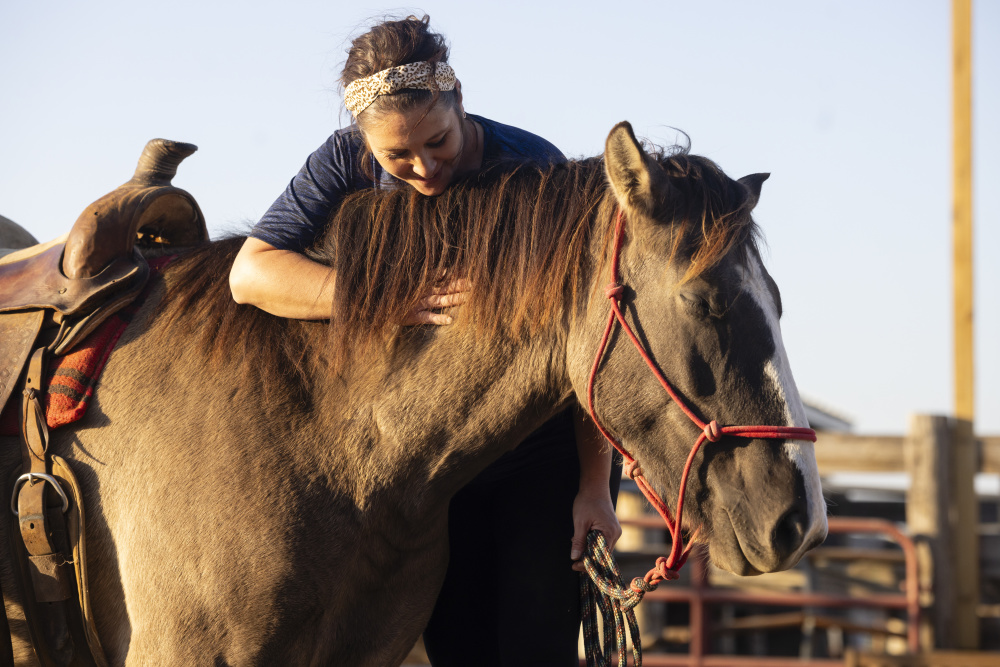
Through “brain-based horsemanship,” a set of principles based on research by neuroscientist Dr. Stephen Peters, participants like Miller learn how to see the mustangs as a mirror of their own inner experiences. By observing body language and behavioral responses in horses, veterans notice where they are holding tension, fear or anger in their own bodies and begin to reshape their neural responses to stress.
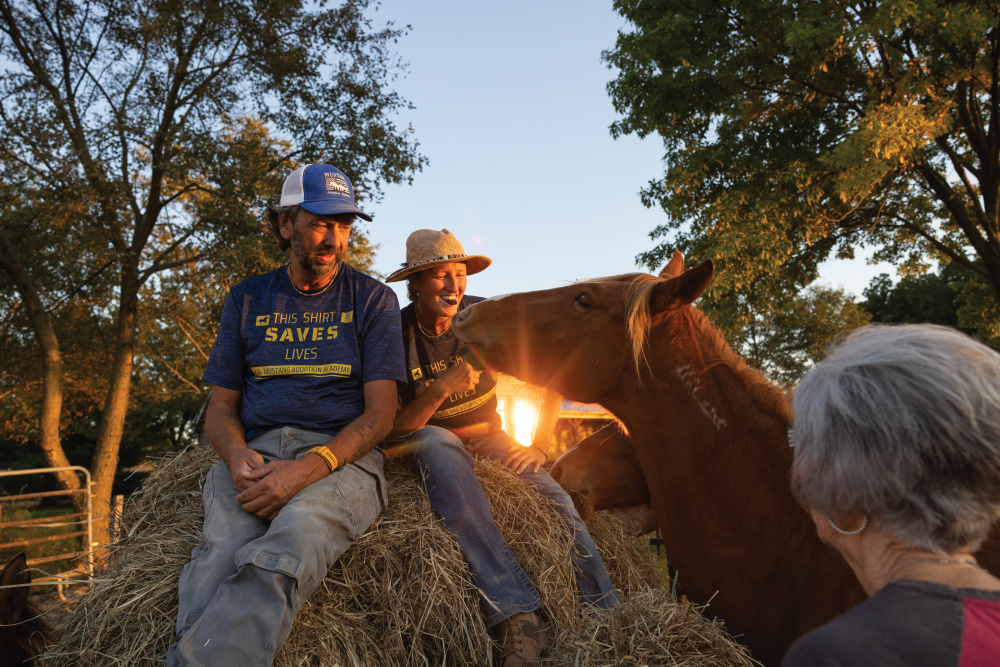
“It’s co-regulating with another being,” says Daniella DeSilva, program facilitator at the Mustang Adoption Academy. “Often, veterans are drawn to either the horse that mirrors themselves or is the complete opposite.”
See more: 550 Wagyu Steers the Way to Local Flavorful Beef
Finding New Purpose
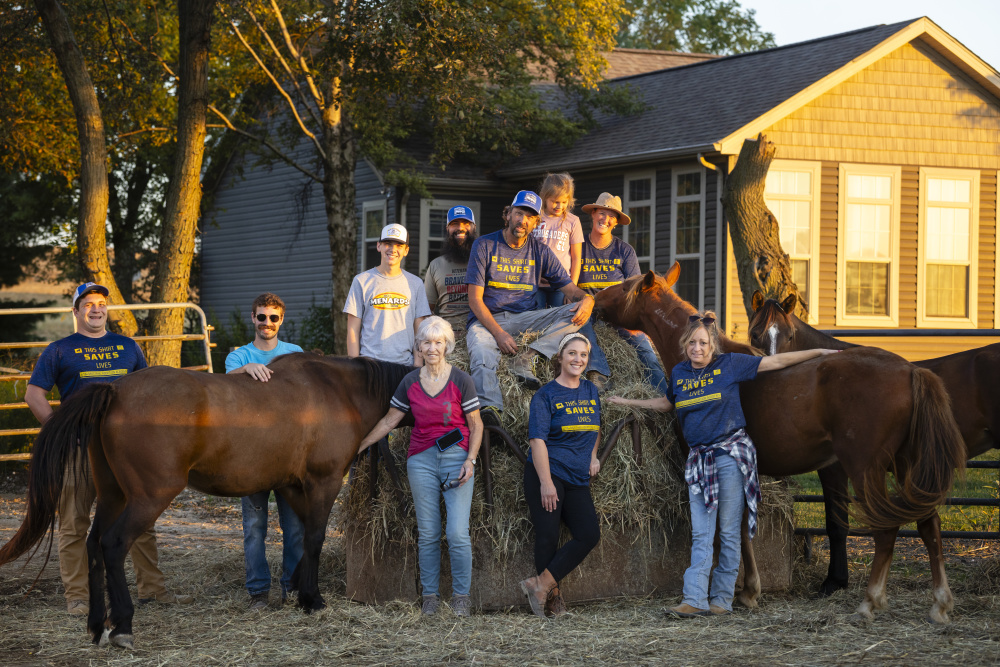
For DeSilva and Skyler Epperson, director of the Mustangs of Service program, working with horses has long been a way to deal with traumatic experiences in their own lives. The program initially grew out of a partnership with the Bureau of Land Management to find loving homes for wild mustangs and recently evolved into a means to help veterans living with PTSD.
Other horses come from Wild Horse Summit, which helps educate the public about wild mustangs and is involved in a number of mental health initiatives. DeSilva and Epperson intend for the Mustangs of Service program to help address the number of veteran suicides in Indiana and surrounding states, which are statistically higher than in the rest of the nation.
“Every single one of our vets matters,” DeSilva says. “What we’re aiming to do is help reduce the national average of veteran suicides.”
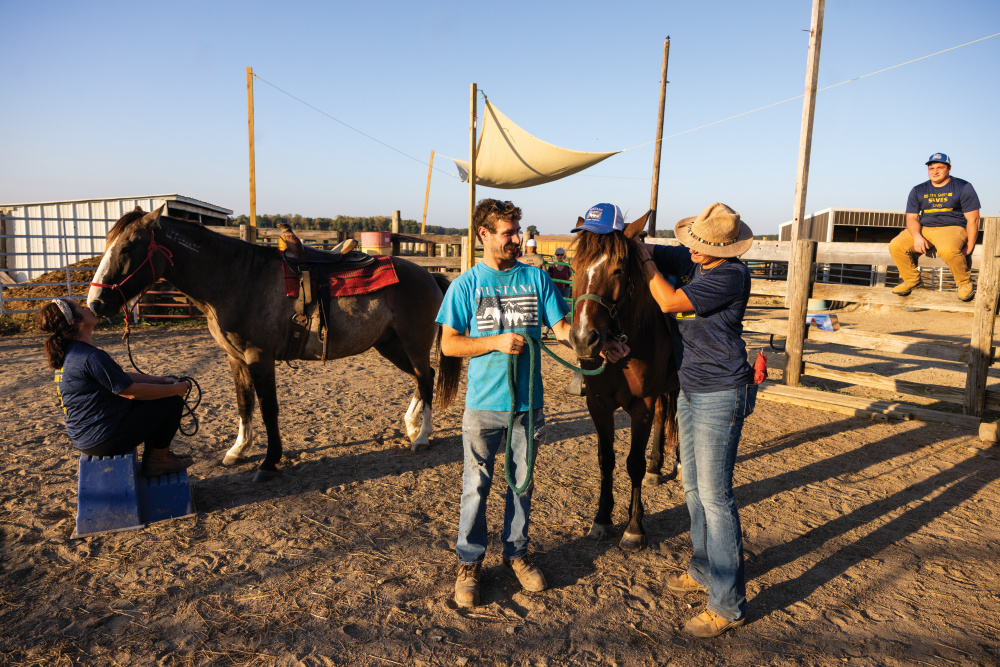
Since early 2025, the program’s number of veterans has steadily grown, with participants like Miller seeking to spread the word about its impact.
“I want to see my brothers and sisters enjoy their life in a way that they probably have not in a while, if they are anything like me,” Miller says. “I know this works, and I just want to share it with everybody.”
Epperson and DeSilva stress that the program is completely free to all veterans, including food and housing costs, and remains a nonclinical and nonreporting therapeutic option.
See more: Trot Over to Brown Family Ranch for Horses and Locally Grown Food
Coming Back Home
For Epperson, the most powerful moment in sessions is when the results of brain-based horsemanship become tangible. After months of building trust between horses and veterans, there is a moment when old neurological responses are overridden, and a mustang or a veteran initially steps back from a stressful situation, then takes a step forward instead of retreating into fight-or-flight mode. Epperson calls this the “come back” moment.
“That’s the moment that you know they’re building something really, really strong,” Epperson says.
Through deepening his bond with Whiskey, Miller saw the “come back” moment manifest in his own life. He learned how to manage his stress responses, come down from the red zone (or crisis state) and strengthen his relationships.
“I noticed I was starting to ‘join the herd’ a little bit,” Miller says. “It has helped my marriage. It has helped my friendships. It helped just being at work.”
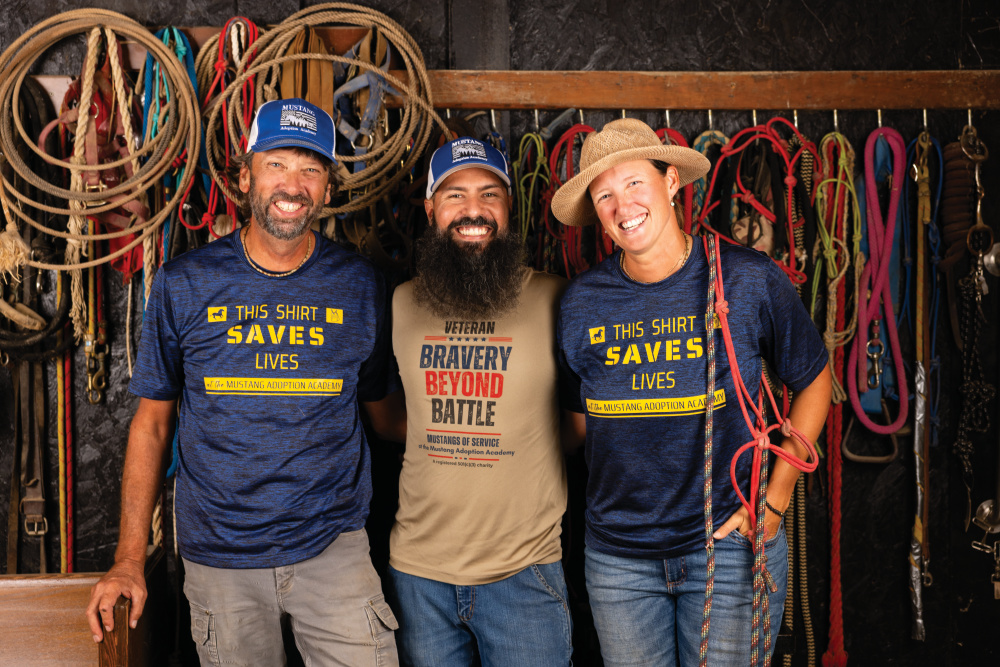
While Miller was never interested in horses before the program, he now owns two mustangs and still returns to the ranch for touch-up sessions. Whiskey remains at the ranch, where he continues to aid veterans in his forever home. What began as an experiment has become a deeply ingrained part of Miller’s life and work.
“It’s a new home,” Miller says. “And once you find it, it’s hard to leave something like that.”
To learn more about the Mustangs of Service program at the Mustang Adoption Academy, visit mustangadoptionacademy.com.
See more: Retired Army Colonel’s Advocacy Through At Ease Orchard Supports Other Veterans
You Might Also Like
-

Soul Food Project Provides Access to Fresh Food and Builds Community
-

Chandler’s Orchard & Country Market Blossoms with Family Tradition
-
Innovation in Boiler Nation: Purdue Innovates Launches Successful Indiana Business Startups
-
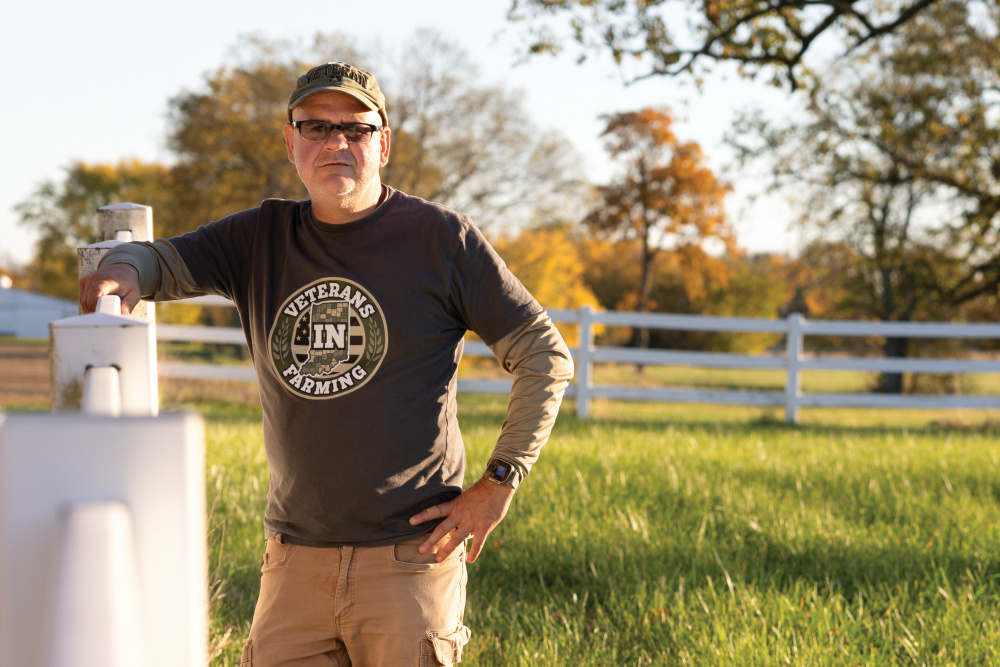
Retired Army Colonel’s Advocacy Through At Ease Orchard Supports Other Veterans