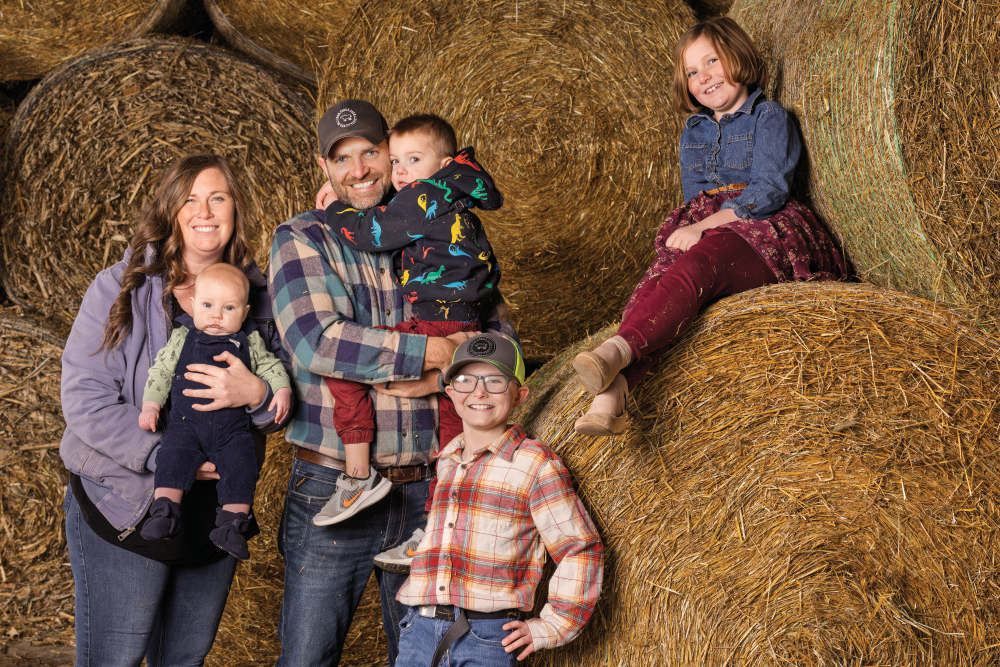
The rolling hills of the Whitewater River Valley cradle more than 140 years of farming heritage at Beneker Family Farms. Established in 1884, this historic homestead has spanned six generations of dedication and hard work.
For the past decade, Allen and Jayme Beneker have taken the reins, raising beef cattle with an unwavering dedication to quality, sustainability and community.
See more: Watch Us Farm Uses Ag to Promote Confidence and Job Opportunities for All Abilities
Moo-ving Toward the Future
According to the U.S. Department of Agriculture, cattle production is one of the most important agricultural industries, consistently accounting for the largest share of the country’s total cash receipts for agricultural commodities. That’s because beef is a highly consumed meat in America, averaging 67 pounds per person annually. Aside from its delicious flavor, incorporating beef into a balanced diet can provide essential nutrients, including protein, iron and vitamin B12.
Beneker Family Farms offers an inspiring business model, centered on ancestral roots with modern supply chain innovation to provide quality beef direct to customers. Their success proves that raising their cattle on pasture, when paired with stewardship and transparency, yields not only premium beef but also enduring community impact.
With hopes that the next generation will carry on the farming tradition, the Beneker family instills stewardship from an early age, with an emphasis on teaching the younger members of the family the importance of caring for the land and their legacy. Their children, Lane, McKenna, Eli and Dean, help out on the farm, learning the work ethic and skills it takes to produce quality beef.
“Like many family-owned and -operated farms, our kids are out here helping us every step of the way, in their muck boots with pitchforks,” Jayme says.
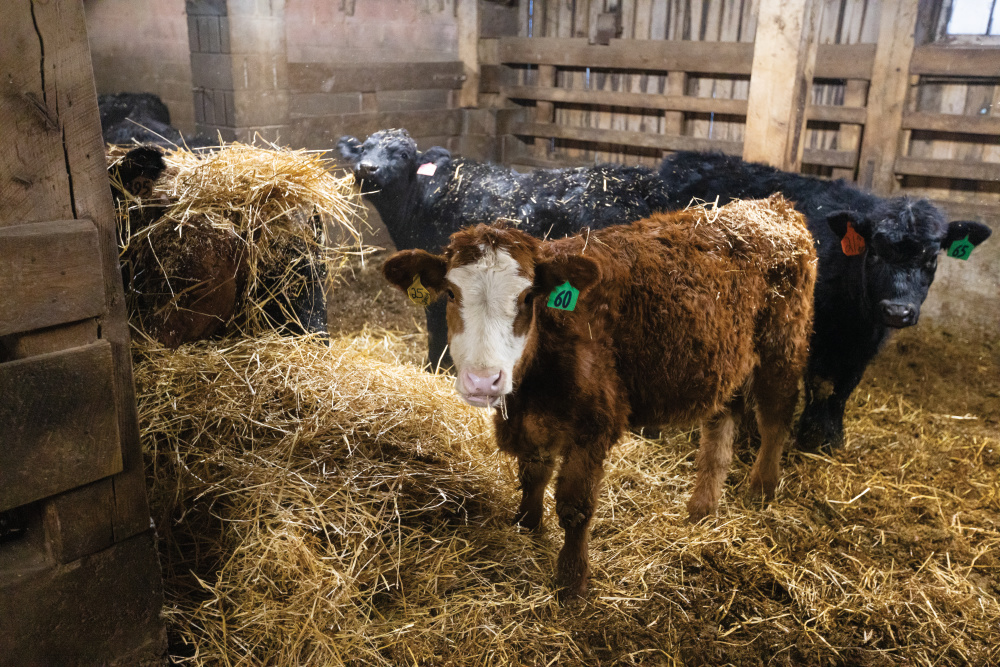
The Benekers locally source and hand-select calves from neighboring family farms. With 200 acres of fertile fields speckled with flowing streams, the pasture-raised approach benefits the environment, the animals and, ultimately, the consumers’ taste buds.
“We prioritize rotational grazing, as well-managed pastures with naturally diverse plant life help prevent soil erosion,” Allen says. “We want our pastures to remain healthy for our future generations.”
See more: LT Farm Meats Focuses on Stewardship, Community and Quality
Pasture to Plate
Cattle grazing promotes nutrient cycling through their manure, naturally fertilizing the soil and reducing the need for synthetic fertilizers. Plus, grass-fed systems can reduce the risk of water pollution from agricultural runoff, as they don’t require significant levels of synthetic inputs.
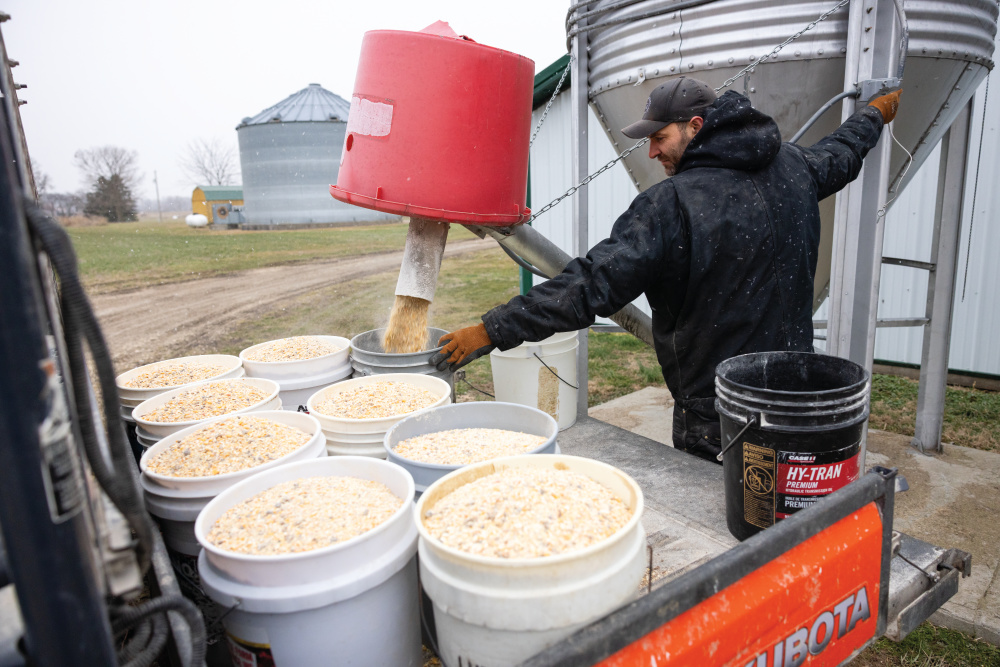
“Our cattle have a free-range, free-choice diet,” Jayme says. “This involves providing a constant, readily available supply of feed, allowing the animals to self-regulate their intake and balance their own nutrient needs with grass, greens and limited grains.”
Following a grass-forward beginning, the herd transitions to a grain-finished diet.
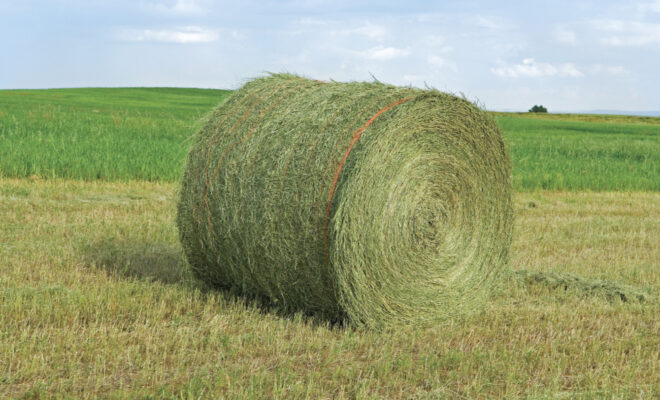
“We’re able to grow everything we need to feed the cows right here on our farm, including high-protein hay for winter months,” Allen says. “We finish about 350 head of cattle a year.”
Beneker Family Farms’ cattle are naturally processed, nitrate-free at a USDA-inspected facility, and dry-aged for roughly two weeks to achieve superior tenderness, marbelization and flavor.
“The dry-aging process ensures patrons will be able to cut their steak with a fork, and roasts will fall off the bone,” Jayme says.
See more: Brian Homan Carries on His Family’s Farming Tradition Raising Pigs in Pennville
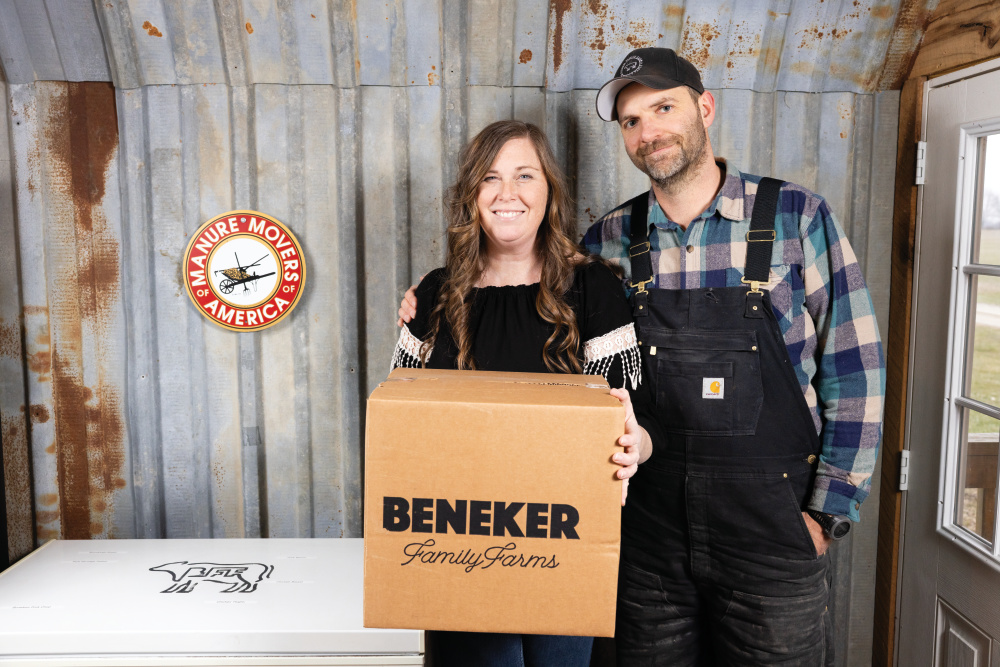
Cultivating Customers
The couple has embraced tried-and-true generational knowledge while concurrently modernizing the farm’s business model and marketing.
“We took a look at what our farm had to offer and what fit our family’s values and decided that direct-to-consumer was a way to create a stable and rewarding market for our beef,” says Allen, noting the switch from when his parents, Dave and Jackie Beneker, prioritized commodity markets.
A USDA Value-Added Producer Grant helped Beneker Family Farms grow the business by creating a fresh website (powered by Shopify) with online ordering and customizable beef subscription boxes.
“Our beef is vacuum-sealed and safely shipped directly to customers in eco-friendly coolers to ensure freshness,” Jayme says, referring to the sous vide-ready packaging.
The convenient and efficient delivery option is complemented by friendly farm pickups. The Benekers view this personal, relationship-building opportunity as their bread and butter.
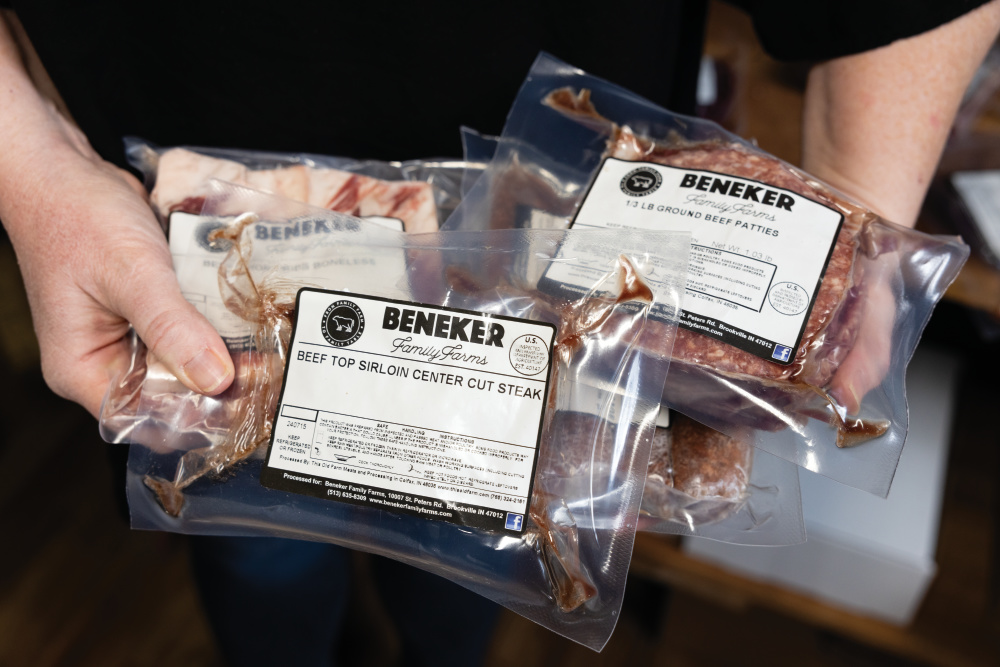
“I think consumers want to know where their food comes from and how it’s raised or grown,” Allen says. “The only way to really know that is to know the farmer and ask those questions.”
Jayme says these friendly interactions help educate consumers and inspire home cooks.
“A new patron may initially come in for a familiar item, like ground beef,” she says. “But, over time, we’ll converse about different cuts and options. So, customers often expand their repertoire of ingredients and recipes.”
Beneker Family Farms further expanded its pickup options by launching Homegrown Food Hub, its elevated retail farm stand. In addition to Beneker’s dry-aged beef, Homegrown Food Hub also sells other farm-fresh commodities, such as chicken, eggs, honey, milk, pork, vegetables and even dog biscuits, sourced from partnering producers.
Homegrown Food Hub is, of course, always stocked with an array of Benekers’ beef products, including brats, filets, ground beef, jerky, roasts, short ribs and steaks. With plans to diversify the farm with sheep, lamb products may soon be available as well.
To learn more about Beneker Family Farms or to purchase beef, visit benekerfamilyfarms.com.
See more: Coverdale Angus Raises Award-Winning Cattle Through Superior Genetics