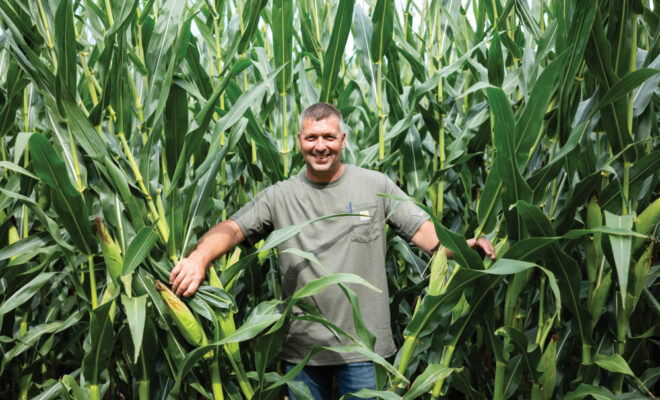
The river running through Brent Risner’s land holds a special place in his heart. Risner’s mother and father originally owned the 80-acre farm in Starke County, and Risner and his brother grew up playing in the Yellow River, which bisects the land.
“That’s where we hung out when we were kids, swimming and camping out,” Risner says. “We spent our whole childhood there. That’s why it does mean a lot to me.”

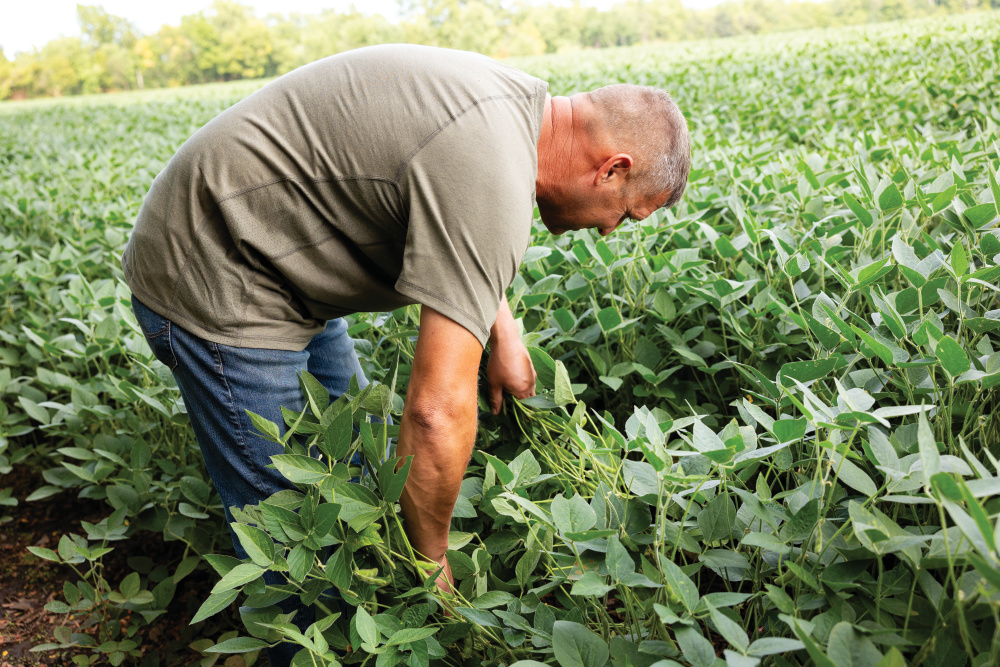
Today, Risner grows corn and soybeans on the original family farm, plus nearly 5,000 additional acres. As a fourth-generation farmer, he’s taken the knowledge he’s acquired from his ancestors and continues to learn, modifying his practices based on current research and results on the land he farms.
See more: Beautiful Edibles Focuses on Food Advocacy to Help Nourish the Community

Rooted in Respect
Respect for the land and natural resources, as well as updated research and technology, continually helps the farm improve its sustainability efforts. For example, Risner recalls his father applying fertilizer at the same rates over the entire field.
“Back then, we didn’t have the technology we do now, and when you came up to the ends of the fields, you’d just keep spreading and double spreading,” Risner says. “That was a total waste of product.”
Risner now samples his soils and applies fertilizer at a variable rate, meaning fertilizer only goes on the sections of land and the crop where it’s needed.
“That’s a huge thing because you’re not wasting fertilizer, and you’re not letting extra fertilizer run off,” he says. “It’s quite an expense to do the sampling, but I think that is really important.”
Different soils receive differing tillage treatments as well. Many of Risner’s fields are no-till, a practice minimizing soil disturbance, which helps keep nutrients in the soil and reduces erosion. No-till not only helps combat erosion from rains washing soil away, but it helps keep the soil where the farmer wants it.
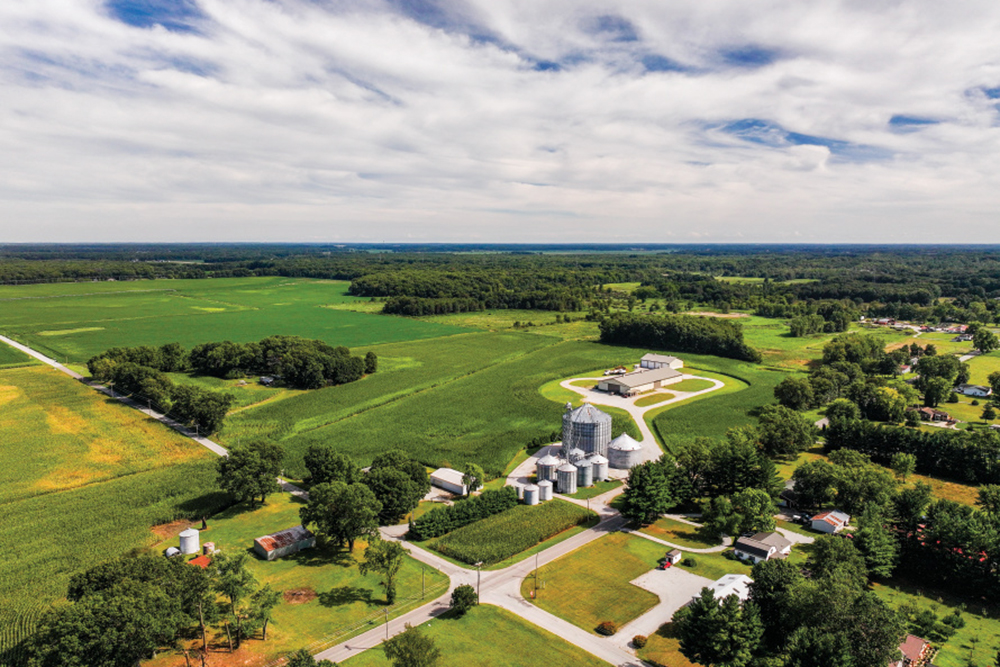
“Blowing wind is a big thing around here,” Risner says of his land in Starke County. “Even a little bit of wind picks up this lighter, sandy soil, and you lose a lot of ground that way.”
Near the Yellow River, he put in filter strips, which are narrow bands of grasses and other vegetation planted near waterways to limit contaminants from entering the water.
“It’s a buffer of about 120 feet where you are not putting any chemical or fertilizer between the waterway and where you are farming,” Risner says. “Plus, it gives a place for the wildlife to nest. Doves, quail, rabbits – all kinds of wildlife take advantage of that grass.”
Wildlife also thrives in the woodlands on Risner’s property.
“Every 15 to 20 years, we may take some logs out just to keep the woods healthy,” says Risner, noting the maples, black oak, white oak and cottonwood trees in the forest. “We just try to maintain the woods the best we can.”
See more: Soul Food Project Provides Access to Fresh Food and Builds Community
Stewardship Success
In recent years, Risner has incorporated cover crops into his conservation practices. Cover crops help build more organic matter in the soil, hold some of the soil’s nutrients through winter, keep those nutrients from washing away in the rain and even help suppress weeds in the spring.
“Every year, we try to plant a little more acreage in cover crop,” he says. “We’re seeing the benefit of it.”
Benefits from these practices have helped improve the farmland as well as the quality of the Yellow River.
“The water in that river is cleaner than it used to be,” Risner says. “When we got a big rain in years past, you’d be able to see that river turn to dirt. That has changed over the years, and it’s not only me but other farmers, too, trying to manage the runoff.”
To recognize his efforts, Risner was named Starke County’s River Friendly Farmer. The award, sponsored by Indiana Farm Bureau, acknowledges farmers for implementing conservation practices such as no-till and cover crops, which ultimately protect waterways and improve water quality in Indiana.
Risner says the award means a great deal to him, in part because the Yellow River on his land is so important to him and because the public attention lets people know farmers recognize the importance of conservation.
“We have to take care of this land,” Risner says. “We have taken a lot off of it through the years, and to keep it producing like it is and improve it, we have to make some changes.”