Advertisement

While people often drive by fields of hay, they may not know there are different varieties or even the difference between hay and straw. Read on to learn the important differences, from nutrients to what animals it feeds.
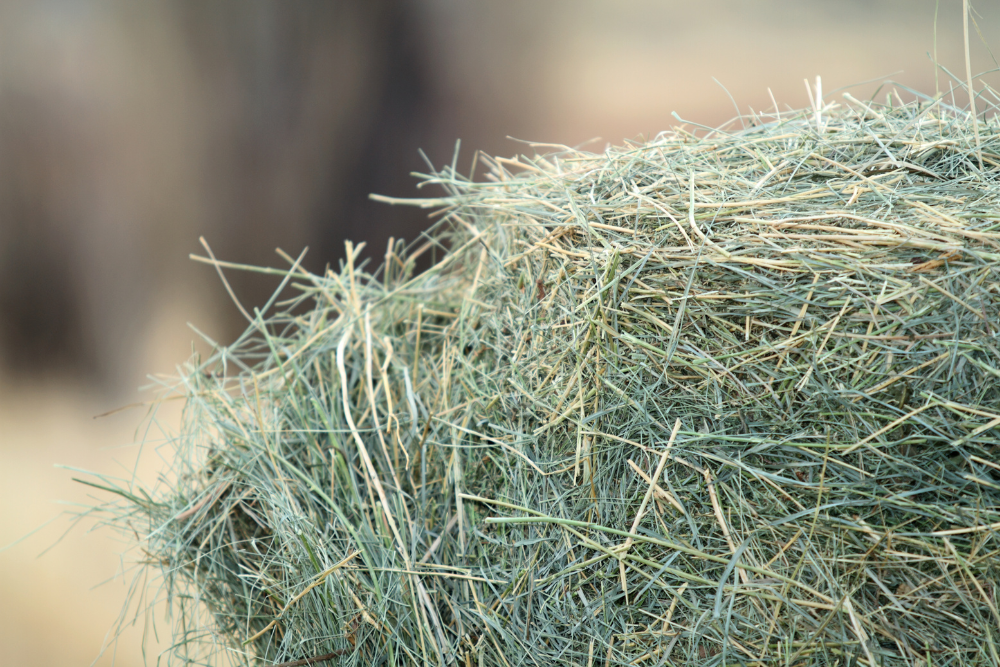
- Some of the most common types of hay are alfalfa, oat, orchardgrass, timothy and triticale.
- Alfalfa hay, a great source of quality protein and nutrients, is important to dairy cattle and other livestock that need to sustain high energy. The amount fed to livestock has to be carefully monitored or it can cause bloating due to overindulgence.
- Oat hay is ideal for young livestock consumption if cut when the oats bloom. This type is primarily found in cool temperature climates.
- Orchardgrass, which is great for horses, is high in fiber, protein and nutrients. However, like timothy hay, it is high in calories.
- Timothy hay, a high-fiber and low-protein feedstuff that’s easy for livestock to digest, is mainly used for horses. Due to the low protein, it is utilized as a filler to satisfy appetite without excess calories.
- Triticale is a hybrid of rye and wheat hay, making a versatile feed for both silage and grazing livestock thanks to its high digestibility and protein forage. It is often fed to dairy and beef cattle, and it’s gaining popularity for horses.
Sources: Ag Daily, Purdue University Extension, U.S. Department of Agriculture,