


It’s nearly lunchtime on a Wednesday at Indian Creek High School in Trafalgar, and students and staff are buzzing in the hallways. That’s because Creek Cattle Co. hamburgers are on the lunch menu.
These are no institutional-grade burgers. Creek Cattle burgers are made with 100% local beef from cattle raised by students at the school’s barn. Creek Cattle Co. is an innovative, hands-on, farm-to-table program.

“I know of four similar programs in the state, but none are quite like ours,” says Joe Dunn, agriculture teacher and FFA advisor.
About five years ago, ag students began building a farm from the ground up, including writing a business plan with funding options, studying models of similar programs, and presenting their ideas to potential granting agencies and sponsors.
Dunn says the overall idea was to demonstrate animal production, from farm to plate, as completely as possible. Students raise the cattle to market weight, and meat sold at market price is utilized in school lunches throughout the district, with profits supporting the Creek Cattle Co. program.
See more: Beautiful Edibles Focuses on Food Advocacy to Help Nourish the Community
Self-Sustaining Success
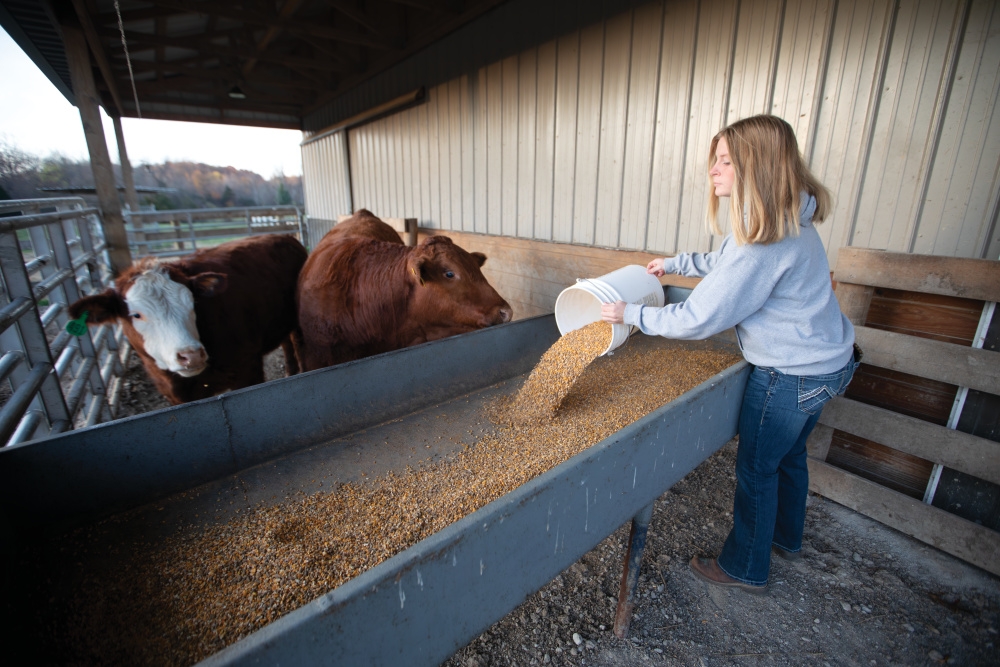
Each student in Dunn’s animal science classes is required to feed the five cattle in the current herd a certain number of times each semester. Over the summer, students enrolled in Supervised Agricultural Experience (SAE), a structured experiential and work-based learning opportunity, assume all responsibility for feeding and other necessities to maintain the facilities.
In the summer of 2024, SAE students began receiving pay for their work, with those funds coming from Creek Cattle Co. profits. Students also monitor the animals for growth and signs of illness.
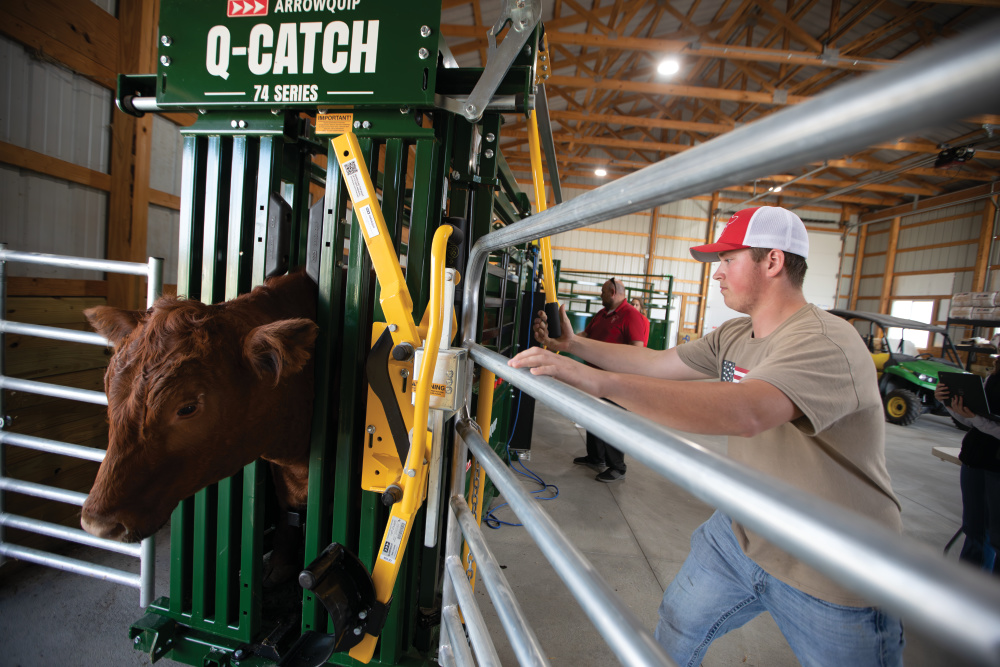
“Students are weighing the animals on a regular basis and calculating the rate of gain and feed efficiency,” says Andrea Perry, assistant superintendent of the Nineveh-Hensley-Jackson (NHJ) United School Corporation. “We were able to obtain the equipment for this with the help of grants, donations and community support.”
When they reach the appropriate market weight, the cattle are sent for processing. Then, NHJ Food Service plans and prepares school lunches utilizing the beef, and profits circulate back to the Creek Cattle Co. program.
“We do have donations, including corn and hay for feed, but the farm is mostly self-sustaining now,” Dunn says.
See more: Beautiful Edibles Focuses on Food Advocacy to Help Nourish the Community
Hands-On Experience
Although the school is located in an agricultural area, Dunn estimates less than 20% of his students live on farms with production animals.
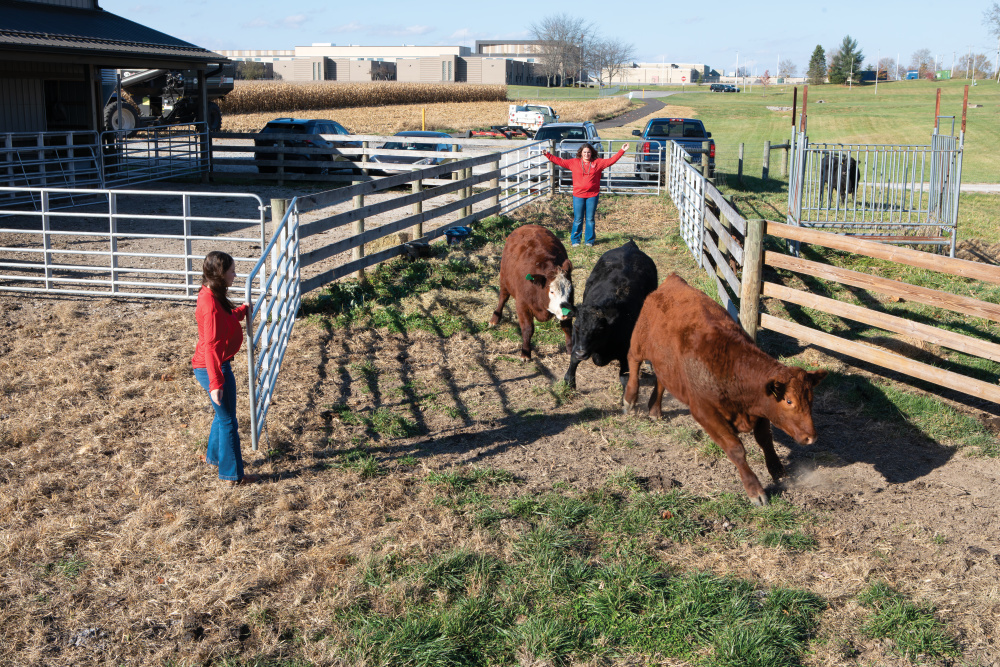
“Most of them have never cared for livestock,” Dunn says. “There is a lot of learning in students’ understanding of what we are feeding the cattle, why we are feeding that, how we are caring for them, and how to move the cattle from pasture to barn efficiently and safely.”
Taking responsibility for the animals is another teaching moment.
“These cows need to be fed twice a day, even Christmas Day and in sub-zero temperatures,” Dunn says. “It’s the students’ responsibility to make sure teachers and advisors know things are all OK in the barn.”
For the 2023-24 school year, a capstone course was added.
“The curriculum is essential to run the farm,” says Luke Skobel, Indian Creek High School principal. “This goes from securing cattle each year to solving whatever problems come up.”
He says students have tackled a pasture’s drainage issues, a bulk bin leak and helped the veterinarian administer medications to a sick cow.
See more: FFA Facts & Figures
Leading the Way
Many youths seeking a profession with animals see veterinarian as the only career option, but at Creek Cattle, students see firsthand the wide array of jobs that work with livestock.
“A computer-savvy student who sees how we track weight gain and other measures on spreadsheets might have the spark lit for agriculture,” Perry says.
Or students who like science begin to realize major feed companies have nutritionists and scientists on staff.
“Creek Cattle Co. is the base for us to show a lot of different career paths in the agricultural community,” Perry says.
The program is a beacon both for incoming students and other ag programs.
“Students are transferring here from other districts because of the ag program, and certainly, Creek Cattle Co. is the shining star,” says Skobel, who notes NHJ has gone from one ag teacher to three because of student demand.
NHJ has hosted representatives from other school districts who are interested in starting similar programs.
“Our students are giving those tours and talking about what we’re doing,” Perry says. “That builds confidence and leadership skills in our students.”
See more: FFA Paved the Way for Lisa Chaudion’s Trailblazing Career
Districtwide Impact
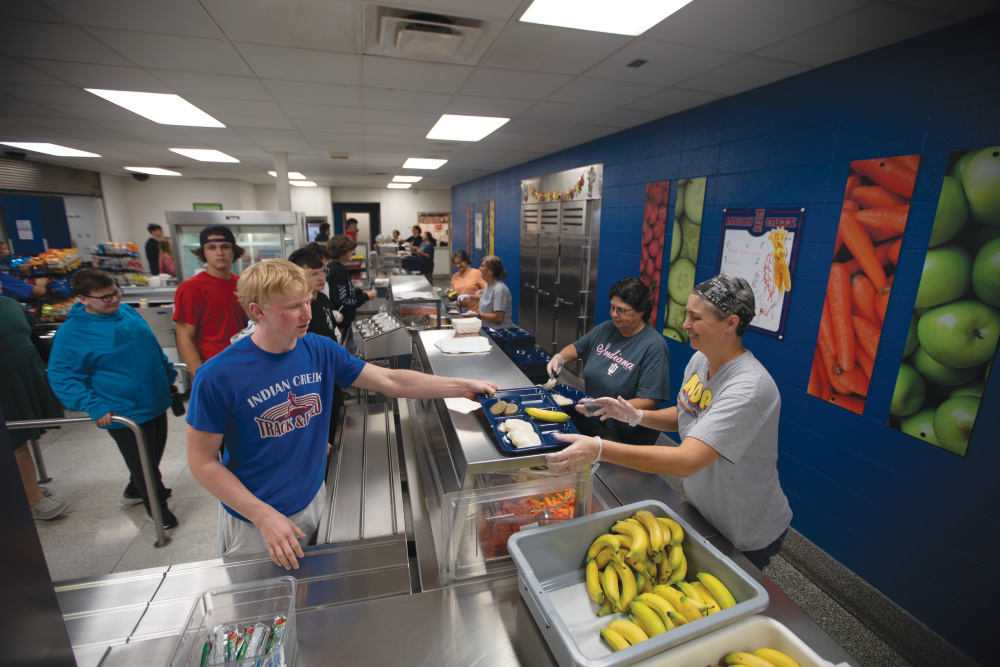
Back in the school cafeteria, students enjoy other food items made with Creek Cattle Co. beef, and the school looks to students for input on the meals they like. Based on student surveys, NHJ Food Service added walking tacos – tacos made in chip bags – for the 2023-24 school year.
“The students absolutely loved it,” Perry says.
The walking taco success has influenced NHJ Food Service to add even more Creek Cattle Co. beef to the menu.
“It was certainly a learning curve for the entire school corporation, but we’re now at the point we could probably double our herd and still have usability for all that beef in the school cafeteria,” says Dunn, illustrating the impact of Creek Cattle Co.’s success throughout the entire district.
See more: 4-H Volunteers Provide Crucial Support to the Organization

Love this! Thankful the Child Nutrition team gets to partner with CCC!