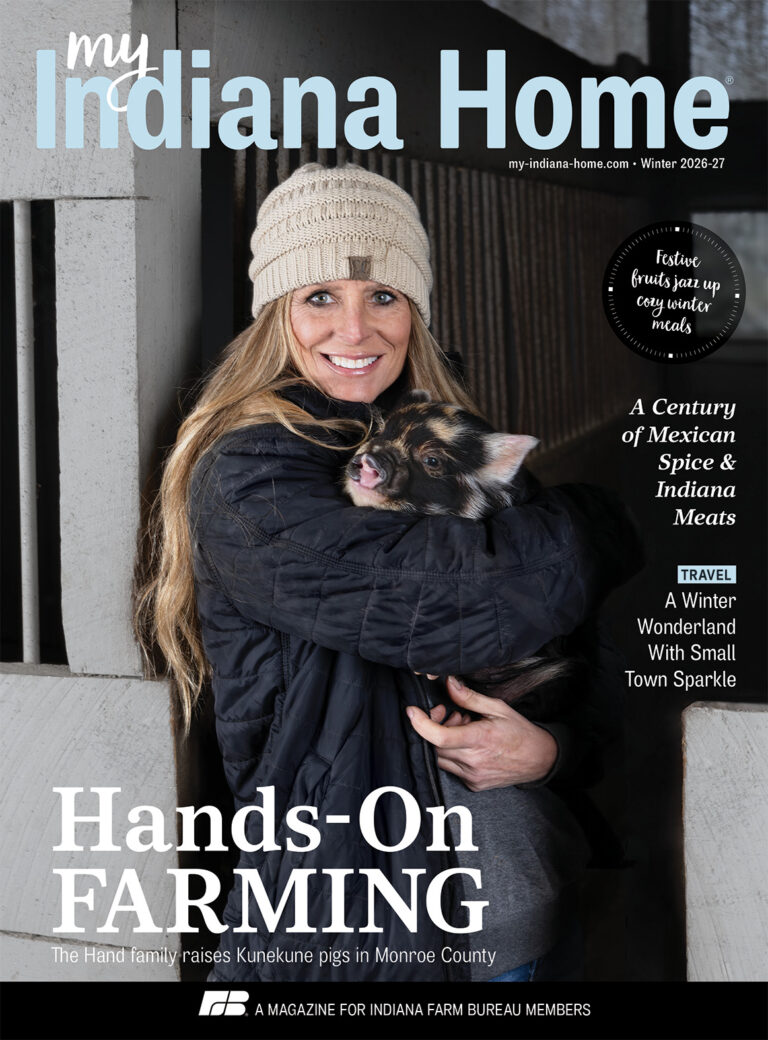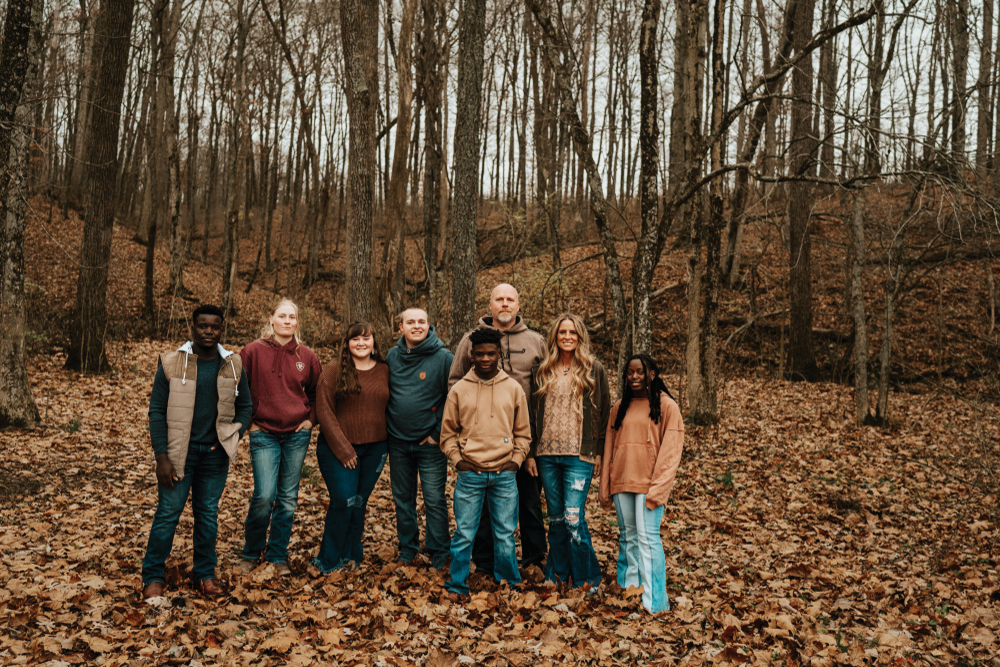
Amanda and Jason Hand founded MKONO Farm because they believe it’s important to know how to produce your own food and to share with others where food comes from. The couple, along with their five children, started farming after Jason retired from the Navy and accepted a job in Washington, D.C. They originally bought a farm in Maryland, but when an opportunity arose for the native Hoosiers to transfer to Bloomington, Indiana, they took it, moving in 2021.
“The primary reason for the move was to allow us to take care of family,” Jason says.

The Hands also wanted to find a way to provide local food direct from their farm to the community. Jason served for a time in Africa during his 21 years in the Navy, which is the inspiration for the farm’s name with “mkono” meaning “hand” in Swahili, an ode to his service and their last name.
“What got us into this, what’s kept us into it and what will probably keep us in it, even if we aren’t selling to our community, is the fact that it is so important to know how to grow your own food,” Amanda says.
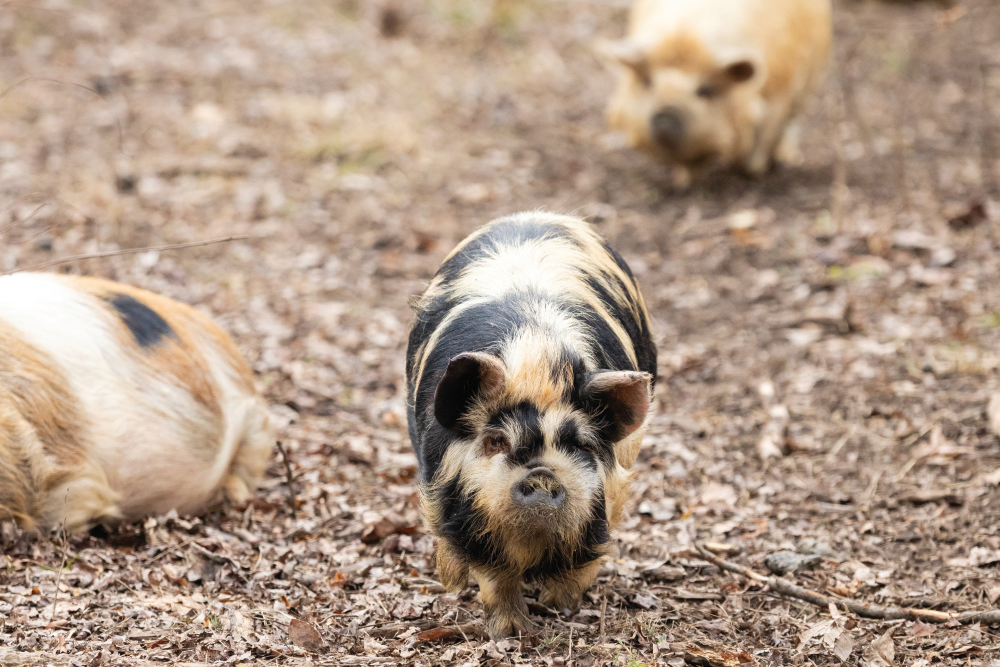
While the Hands experimented briefly with chickens and goats, they settled on Kunekune pigs after researching swine that would thrive on a pasture-based system.
“The Kunekunes were the most docile and least destructive,” Jason explains.
Another attraction is they are unique. Kunekunes are a heritage breed from New Zealand developed by the Māori people. They reach nearly 400 pounds at maturity, but that still makes them considerably smaller than a commercial hog, which can reach 600 to 800 pounds or more at maturity, depending on the breed.
“I decided I was going to try to capitalize on the uniqueness of the breed rather than do what everybody else was doing,” Amanda says.
See more: Healing Herd: Veterans Find Community and Purpose Through Mustangs of Service
Foraging Flavor
Despite their smaller size, Kunekunes also grow slowly, taking 10 to 12 months to reach a market weight of 180 to 220 pounds, compared to around six months for a conventionally raised commercial pig. The Hands attribute the longer growing cycle as one of the reasons why the meat tastes so wonderful. Another reason is what the pigs eat and how they are getting that food.
The Kunekunes are raised on pasture rather than indoors, feeding on a carefully selected mixture of plants.
“They have to have forage because the taste comes from the movement,” Amanda explains.
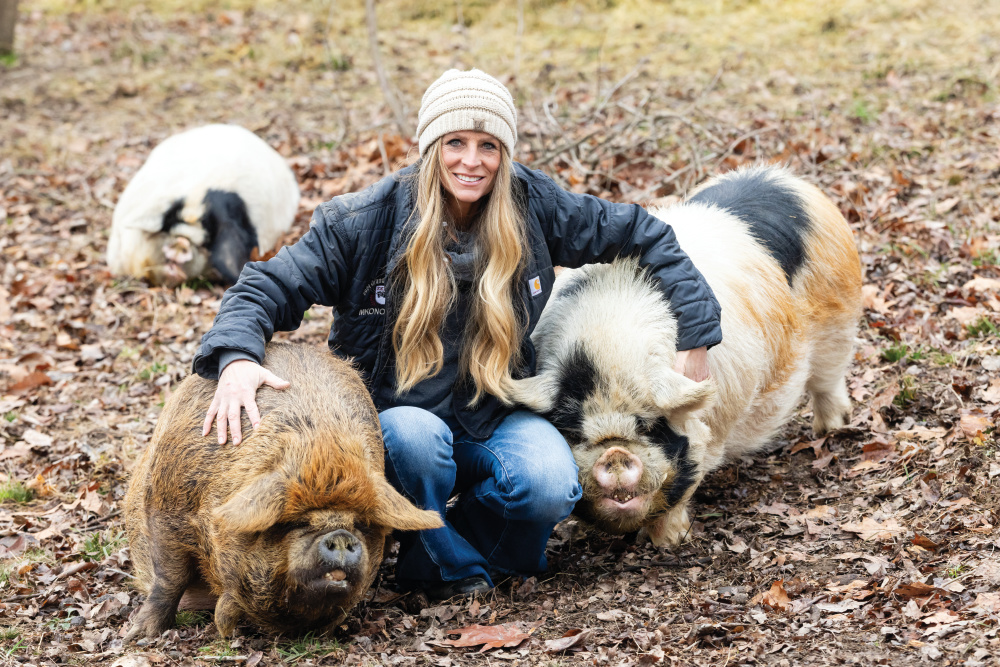
At MKONO Farm, the Kunekunes forage most of their feed from the 16 acres of pastures and woods as part of a rotational grazing system that includes a wide variety of protein-rich grasses and legumes. Due to the rotational grazing, which allows the pasture to recuperate, the Kunekunes move around to different areas depending on the season. MKONO Farm is also in the process of developing “silvopasture,” which refers to forest lands used for grazing.
“We’re really just trying to use all of our land and be really mindful of it, to be good stewards of it,” Amanda says. “Utilizing a silvopasture, especially in the fall and winter, gets the pigs up out of our lower pasture. It allows our regular pasture to rest all winter long. Also, utilizing the silvopasture in the fall and winter allows for a lot of different types of foraging for the pigs because they’re able to forage for black walnuts, acorns, hickory nuts, mushrooms and things like that.”
See more: First-Generation Farmers Cultivate Success and Break Barriers at Prairie Hills Farm
Direct From the Farm
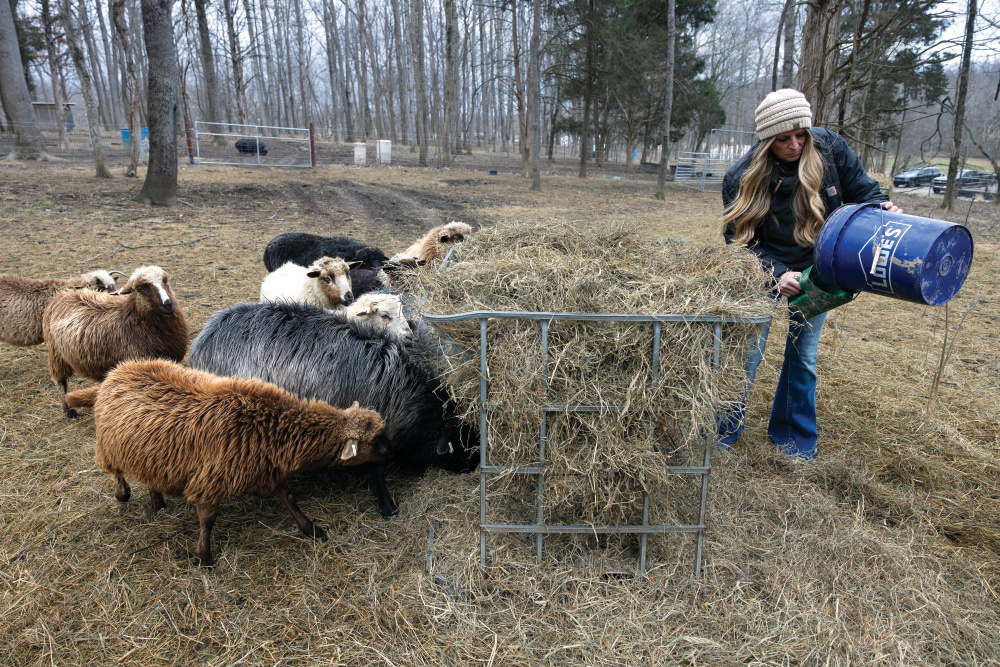
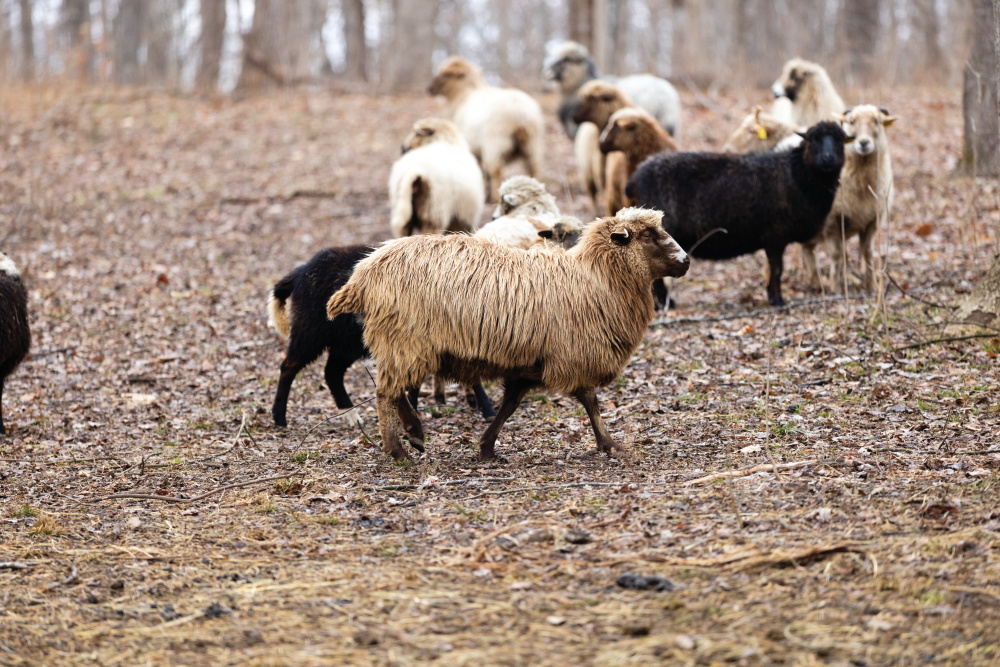
MKONO Farm also raises a heritage breed of sheep called the Navajo Churro, a very sturdy, slow-growing, lean breed of sheep that produces a mild, sweet-tasting meat and very high-quality wool. Plus, they also fit in well with the Kunekunes.
“They tend to eat a lot of things that our pigs aren’t eating,” Amanda says. “They kind of work together that way.”
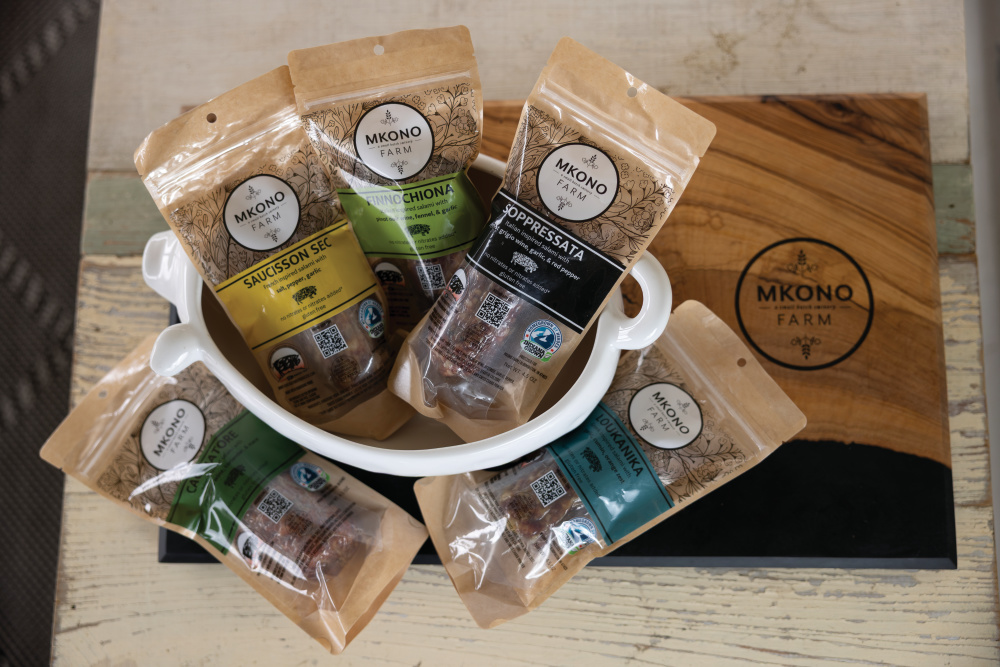
MKONO Farm produces a wide variety of products from their pigs and sheep, including fresh meats (sold by the whole, half or individual cut), salami, several flavors of bratwurst and other sausages, soaps, salves, candles, pelts, fleeces, bacon, ham, and more. Products can be purchased directly from the farm website or at farmers markets in Broad Ripple, Greenwood, Bloomington and Plainfield, as well as through Bethel Lane Farm Stop in Bloomington.
To recognize and expand on MKONO Farm’s innovative practices, the farm was awarded a three-year U.S. Department of Agriculture value-added grant in 2024. Among other marketing efforts, the grant allows the farm to work with and help other Kunekune farms in the U.S.
In addition, the couple is starting to offer on-farm food experiences, such as Pizza on the Porch, which features wood-fired pizzas made with MKONO Farm pepperoni.
To learn more about MKONO Farm, shop the online store and see upcoming on-farm experiences, visit mkonofarm.com.
See more: 550 Wagyu Steers the Way to Local Flavorful Beef
Farm Facts: Kunekune Pigs
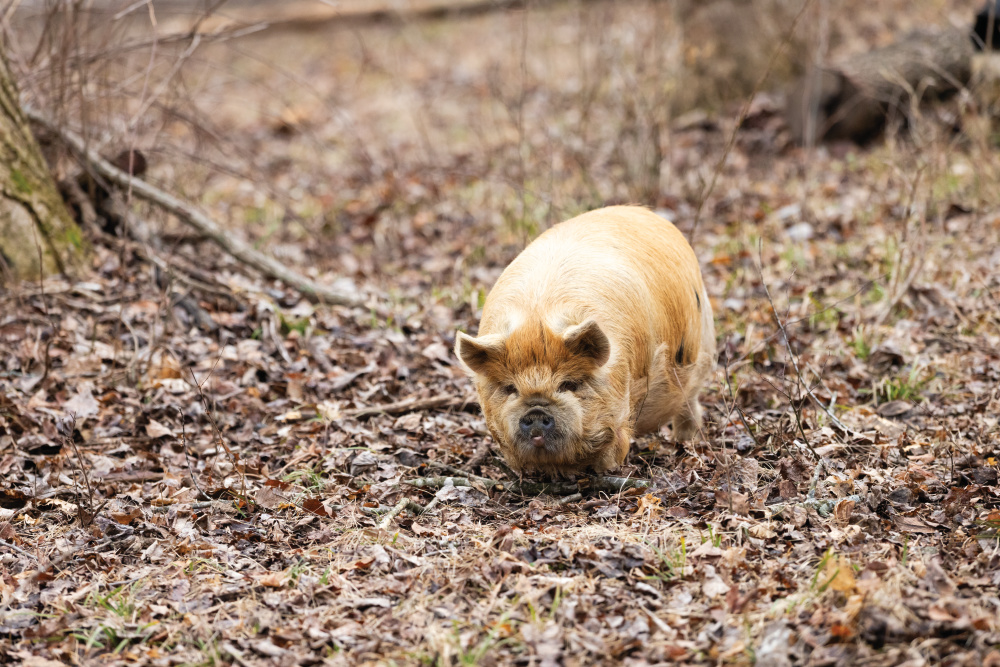
Closely associated with Indigenous peoples from mainland New Zealand, Kunekunes are a small, hairy breed of pigs.
- The Kunekune pig originated in New Zealand, where the breed was kept almost solely by Māori communities.
- The Māorian word “kunekune” means “fat and round.”
- Pigs are not native to New Zealand, so the breed is descended from pigs imported into New Zealand through trade in the 1800s.
- Kunekune pigs are relatively small and highly distinctive, characterized by a short-legged, dumpy build, pot tummy, short, upturned nose and a generally rotund appearance.
- A unique feature of Kunekunes is the “pire pire” (tassels) that often hang from the lower jaw of individual pigs.
- Kunekune pigs are placid, friendly and easy to maintain.
- They are the domestic cousins of wild boars, so they can thrive in a variety of habitats.
- Kunekune pigs graze on grass and other foraged food, needing to be fed only during the winter months.
- Kunekune pigs come in a variety of colors, including solid or combinations of black, brown, blond, ginger and white.
- Their hair becomes thicker or thinner depending on the season, to help keep them warm or cool.
Sources: American Kunekune Pig Society, Barnutopia, Smithsonian National Zoo & Conservation Biology Institute